

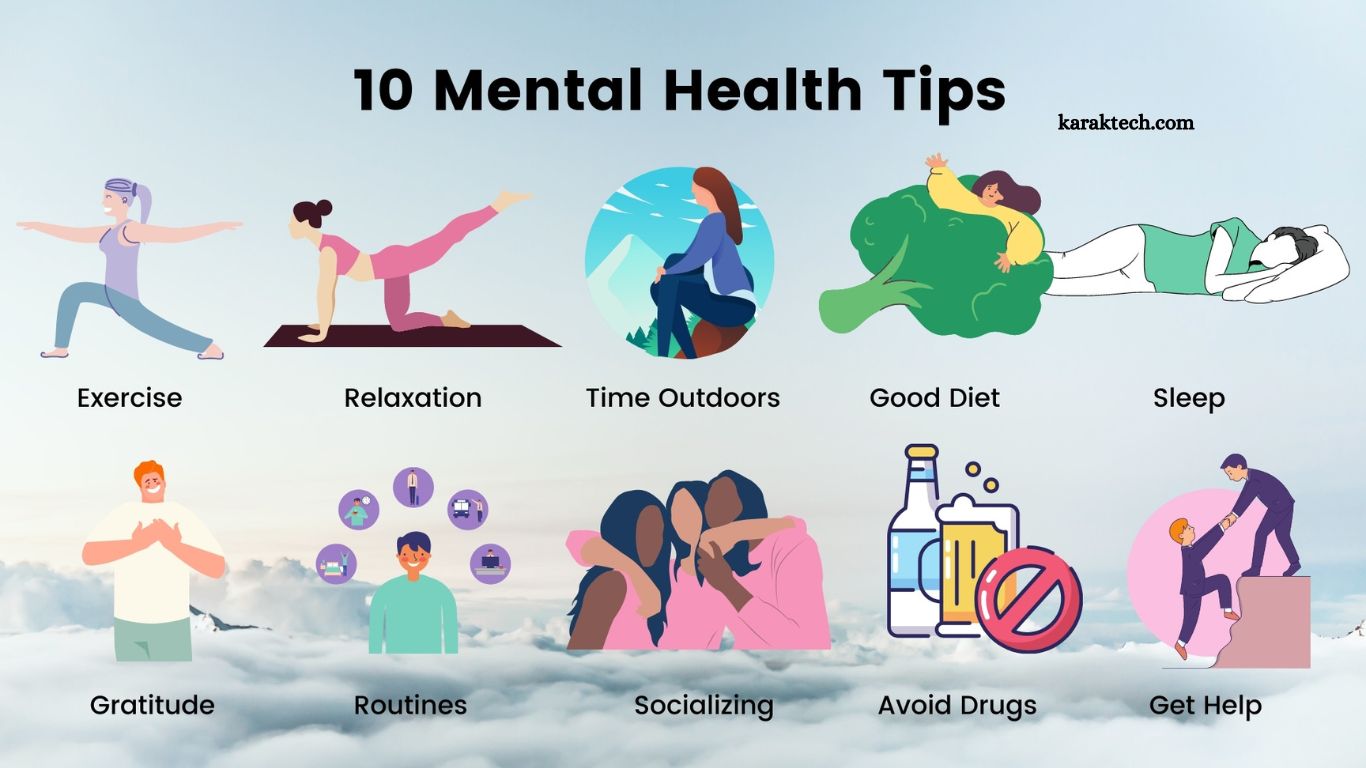
Mental health is essential for living a balanced, productive, and fulfilling life. Daily habits significantly influence emotional well-being, stress levels, and overall mindset. In today’s fast-paced lifestyle, people often ignore self-care, leading to anxiety and burnout.
However, small consistent changes can improve mental stability and happiness. This article explores 10 simple and effective ways to improve mental health every day. These practical tips are easy to follow and help create a healthier, more positive lifestyle for long-term wellbeing and peace.
Read More: Motivation Hacks That Actually Work (Proven Tips)
Start the day with a positive morning routine
Morning habits shape the mindset for the entire day. Wake up early, avoid rushing, and create a calm start.
Try:
- Drink water after waking
- Stretch your body for 5–10 minutes
- Avoid the phone for the first 30 minutes
- Set one clear daily intention
A stable morning routine reduces stress and increases mental clarity.
Practice Daily Gratitude
Gratitude shifts focus from problems to positive aspects of life. This improves emotional balance and reduces anxiety.
Simple method:
- Write 3 things you feel thankful for each day
- Focus on small wins, not only big achievements
Consistent gratitude practice improves overall mood over time.
Stay Physically Active
Movement supports brain health and releases natural mood-boosting chemicals.
You do not need intense workouts. Try:
- Walking 20–30 minutes daily
- Light stretching or yoga
- Home workouts or cycling
Regular activity reduces stress, improves sleep, and increases energy levels.
Maintain a Healthy Sleep Schedule
Sleep strongly affects emotional stability and mental performance. Poor sleep increases irritability and anxiety.
Improve sleep by:
- Sleeping and waking at the same time daily
- Avoiding screens before bed
- Keeping the room dark and quiet
- Reducing caffeine in the evening
Quality sleep improves focus and emotional control.
Limit Social Media Consumption
Excess social media use increases comparison, stress, and distraction.
Healthy approach:
- Set daily screen time limits
- Unfollow negative or stressful accounts
- Take short digital detox breaks
Less screen time creates more mental space and peace.
Practice Deep Breathing or Meditation
Mindfulness helps calm the mind and reduce overthinking. Even a few minutes daily makes a difference.
Try simple breathing:
- Inhale slowly for 4 seconds
- Hold for 4 seconds
- Exhale for 6 seconds
Repeat for 5–10 minutes daily to reduce stress instantly.
Build Strong Social Connections
Healthy relationships protect mental health and provide emotional support.
Ways to improve connection:
- Talk regularly with friends or family
- Share feelings honestly
- Spend quality time with loved ones
Social support reduces loneliness and increases happiness.
Eat Balanced and Nutritious Food
Food directly affects brain function and mood stability.
Include:
- Fresh fruits and vegetables
- Whole grains
- Healthy fats like nuts and seeds
- Adequate water intake
Avoid excess processed food and sugar for better emotional balance.
Set Realistic Daily Goals
Clear goals reduce confusion and improve motivation. Overloading tasks increases stress.
Better approach:
- Break tasks into small steps
- Focus on 2–3 main priorities daily
- Celebrate small achievements
Simple planning improves productivity and mental clarity.
Spend Time in Nature
Natural environments reduce stress and refresh the mind.
You can:
- Walk in the park
- Sit in the fresh air
- Watch sunrise or sunset
Nature exposure improves mood, reduces anxiety, and restores mental energy.
Frequently Asked Questions
What is the easiest way to improve mental health daily?
Start with small habits like gratitude, short walks, and a proper sleep routine.
How long should I exercise for better mental health?
20–30 minutes of light to moderate activity daily is enough for positive effects.
Does social media affect mental health?
Yes, excessive use can increase stress and anxiety, so limit daily screen time.
Can meditation really help reduce stress?
Yes, even 5–10 minutes of daily breathing or meditation helps calm the mind.
How important is sleep for mental health?
Very important. Good sleep improves mood, focus, and emotional balance.
Can diet improve mental health?
Yes, healthy food supports brain function and helps maintain a stable mood.
Conclusion
Improving mental health daily is about building simple, consistent habits that support emotional balance and inner peace. Small actions like proper sleep, regular exercise, mindful breathing, healthy nutrition, and meaningful social connections can create lasting positive change.
