

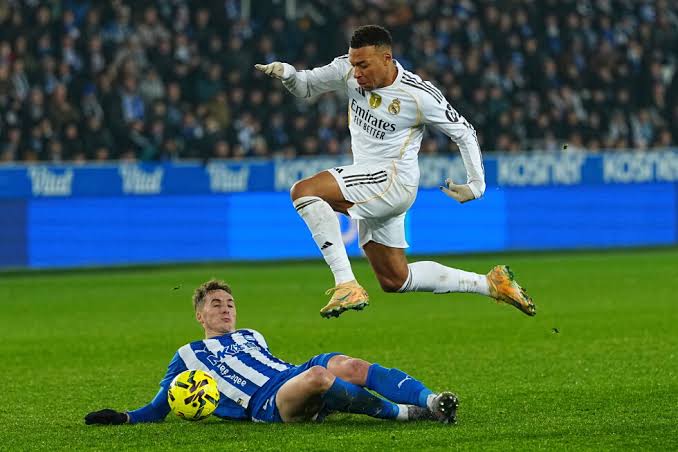
The 2013/2014 La Liga campaign stands out as a historic turning point where ideological football philosophies collided with devastating physical consequences. While the tiki-taka blueprint pioneered by Barcelona still cast a long shadow over the league, mid-tier and elite clubs alike attempted to replicate intricate, short-passing sequences directly outside the opponent’s penalty area. However, this high-density passing approach created a severe systemic vulnerability. By committing excessive structural numbers forward to sustain short horizontal passing networks, possession-oriented teams inadvertently provided their opponents with the perfect compressed environment needed to launch lethal, vertical counter-attacks the moment a single pass went astray.
Why High-Density Passing Formations Overextend Defensive Rest-Defenses
Maintaining an intricate passing sequence right outside the opposition box requires players to squeeze close together to preserve short passing angles. This deliberate tightening of the attacking shape automatically deconstructs a team’s rest-defense, which is the defensive structure maintained while a team is actively attacking. When five or six players occupy a horizontal strip just twenty yards from the goal, the distance between the midfield line and the central defenders widens significantly, leaving a massive vacant prairie in the center of the pitch.
This spatial compression works entirely in favor of a deep-sitting defensive side. Because the passing team is so highly concentrated in one small zone, a single interception immediately bypasses the majority of the attacking players. The structural consequence is an immediate numerical equality or superiority for the countering team, as the attacking full-backs and central midfielders are trapped too high up the pitch to track back effectively.
The Ancelotti and Simeone Blueprints for Exploiting Over-Passing
The 2013/2014 season became a masterclass in punishing possession-heavy styles, executed flawlessly by Real Madrid under Carlo Ancelotti and Atletico Madrid under Diego Simeone. Rather than fighting for possession in the middle third, these teams willingly surrendered the ball, allowed the opposition to advance to the edge of the eighteen-yard box, and collapsed their defensive lines into low, impenetrable blocks.
Once the attacking team committed their central midfielders forward to sustain the edge-of-the-box passing circuit, the defensive trap snapped shut. Real Madrid utilized the terrifying pace of Cristiano Ronaldo and Gareth Bale to exploit the massive gaps left behind advancing full-backs, while Atletico Madrid used aggressive, targeted pressing triggers to steal the ball and instantly feed Diego Costa. This tactical shift proved that holding possession in the final third was often the most dangerous phase of play for an unorganized defense.
Tactical Mechanics of a Final-Third Turnover
Analyzing how a seemingly controlled possession sequence morphs into an immediate goal-scoring threat for the opponent requires breaking down the exact positioning of transitional players. The transition from an attacking pass to a defensive emergency happens in less than four seconds, driven entirely by individual positioning.
The data compiled from transitional sequences during this particular Spanish footballing era highlights how specific types of final-third passing errors generated predictable counter-attacking pathways for the opposition:
| Turnover Type on Box Edge | Intercepting Player Position | Immediate Defensive Vulnerability | Resulting Counter-Attack Velocity |
| Misplaced Short Wall-Pass | Defensive Central Midfielder | Vacated Half-Spaces Behind Full-backs | Extremely High (Direct Verticality) |
| Blocked Central Chipped Pass | Center-Back (Head/Chest) | Isolated Last Defender in 1v1 | High (Central Penetration) |
| Inaccurate Lateral Square Ball | Wide Midfielder / Wing-Back | Exposed Flank with No Cover | Moderate (Wide Exploitation) |
| Intercepted Low Cutback | Full-back at Near Post | Disorganized Midfield Rest-Defense | High (Overload on Weak Side) |
The tactical breakdown shows that short wall-passes intercepted centrally by defensive midfielders yielded the most catastrophic outcomes. Because central midfielders are the primary anchors preventing a direct counter, losing the ball to an opposing player in that exact zone completely paralyzes the rest-defense, leaving the backline entirely exposed to immediate vertical thrusts.
Structural Conditions That Heighten Turn-Over Vulnerability
The Impact of Slow Ball Circulation
When a team ufa168 ทางเข้า the ball outside the penalty box without sufficient velocity, defensive blocks adjust their positioning effortlessly. Slow passing allowed La Liga defenses in 2013/2014 to remain compact, increasing the mathematical probability that an outstretched leg or a compressed passing lane would deflect the ball into open space.
The Breakdown of Asymmetric Full-back Coverage
If both full-backs pushed into the final third simultaneously to provide extreme width during an intricate passing sequence, the central defenders were left completely isolated. Without an asymmetric system where one wide defender stayed deep to form a temporary back-three, any turnover on the edge of the box automatically resulted in a direct, unstructured footrace toward the goalkeeper.
Analyzing Possession Risks via Real-Time Tactical Shifts
Observing these tactical vulnerabilities as they develop on the pitch provides exceptional utility for analysts studying game scripts and real-time behavioral adjustments. If a match features a possession-dominant side stubbornly over-passing against an organized low block, the probability of a high-value counter-attacking event escalates with every passing minute.
Experienced analysts often leverage specific live metrics when evaluating these high-risk possession strategies during live broadcasts. Observation of a team repeatedly failing to breach the box edge implies an imminent defensive breakdown, a trend easily tracked via a modern sports betting service. Utilizing data feeds provided by the online betting site allows observers to spot when a possession-heavy team loses its structural discipline, indicating a prime opportunity to capitalize on live markets favoring an opposing goal via a fast break.
Where the Possession-to-Counter Concept Completely Fails
The hypothesis that over-passing outside the box naturally triggers dangerous counter-attacks is highly dependent on the opposing team’s specific defensive personnel and structural fitness. If an opponent sits in a deep low block but lacks transitional speed in their attacking line, the possession team can over-pass with complete impunity, knowing any turnover will simply result in a slow, easily managed clearance.
Furthermore, if the attacking side possesses elite counter-pressing monsters who instantly swarm the ball the second possession is lost, the counter-attack is suffocated before it can breathe. In these specific scenarios, over-passing acts as a tool for sustained psychological exhaustion, wearing down the defensive block until a physical mistake occurs, completely neutralizing the inherent risks of the style.
Strategic Asset Management and Risk Balancing in Alternative Contexts
The fine line between high-reward strategy and devastating exposure is a fundamental principle that extends far beyond the tactical boards of European football. Just as an aggressive manager must calculate whether a short passing sequence is worth exposing their entire defensive backline to a breakout, individuals operating in highly volatile analytical environments must meticulously hedge their positions against sudden reversals.
This balance between calculated patience and catastrophic risk is highly evident when analyzing statistical behaviors across various recreational industries. For instance, when individuals engage with premium data sets on a casino online website, they must recognize that over-extending resources on a single sequence mirrors a midfielder over-passing outside the box. Success in both environments requires an acute awareness of when to maintain control and when an aggressive posture leaves one completely defenseless against a sudden, decisive shift in momentum.
Summary
The 2013/2014 La Liga season served as a stark tactical warning that intricate passing outside the penalty area is an incredibly high-risk endeavor. When teams failed to maintain a disciplined rest-defense or allowed their ball circulation to become stagnant, deep-sitting opponents converted defensive interventions into lethal, vertical counter-attacks. Ultimately, the campaign proved that possession without structural caution is merely an invitation to destruction, cementing counter-attacking design as one of the most effective tactical weapons in modern football history.
