

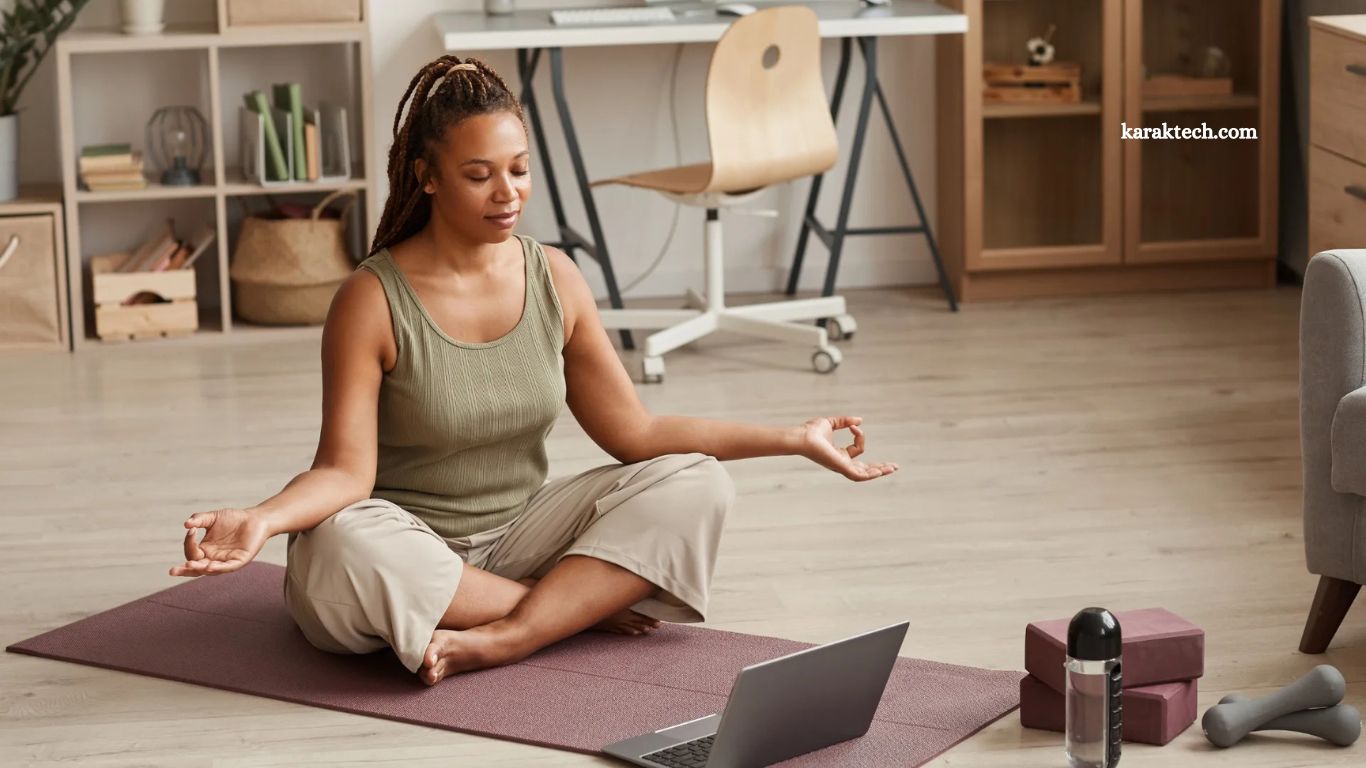
Yoga is one of the simplest ways to improve flexibility, strength, posture, and mental focus. You do not need an expensive studio membership or advanced skills to begin.
With a small space, a few minutes each day, and a beginner-friendly plan, anyone can start yoga at home. This complete beginner’s guide explains how to start yoga at home safely and confidently.
Read More: Best Yoga Poses for Better Sleep and Relaxation
What Is Yoga?
Yoga is a mind-body practice that combines physical postures, breathing techniques, and relaxation. It helps build strength and improve mobility,
Reduce stress and increase body awareness. For beginners, yoga is not about perfect poses. It is about steady progress and consistent practice.
Benefits of Starting Yoga at Home
Practicing yoga at home offers several advantages:
- Flexible schedule
- No travel time
- Comfortable environment
- Low cost
- Ability to progress at your own pace
Regular yoga practice may help with:
- Better posture
- Increased flexibility
- Stronger muscles
- Reduced stress
- Improved sleep
- Enhanced balance
- Greater focus
What You Need to Start Yoga at Home
Starting yoga requires very little equipment.
Essential Items
- Yoga mat
- Comfortable clothing
- Water bottle
- Quiet space
Optional Props
- Yoga blocks
- Strap
- Cushion
- Blanket
A non-slip mat provides stability and comfort, but beginners can also practice on a carpeted floor.
How to Create a Yoga Space at Home
A dedicated practice area helps build consistency.
Choose a space with:
- Enough room to stretch arms and legs
- Good ventilation
- Minimal distractions
- Flat surface
Add calming elements such as plants, soft lighting, or relaxing music if desired.
Best Time to Practice Yoga
The best time is the time you can maintain consistently.
Morning Yoga
- Boosts energy
- Improves focus
- Sets a positive tone for the day
Evening Yoga
- Relieves tension
- Calms the mind
- Supports better sleep
Even 10 to 20 minutes daily can produce noticeable benefits.
Beginner Yoga Practice Duration
Start with short sessions and gradually increase.
Recommended schedule:
- Week 1: 10 minutes, 3 times per week
- Week 2: 15 minutes, 4 times per week
- Week 3: 20 minutes, 4 to 5 times per week
- Week 4: 20 to 30 minutes regularly
Consistency matters more than session length.
Best Yoga Styles for Beginners
Some yoga styles are especially suitable for new practitioners.
Hatha Yoga
Slow-paced and ideal for learning basic poses.
Vinyasa Yoga
Dynamic sequences that link movement with breathing.
Yin Yoga
Longer holds that improve flexibility and relaxation.
Restorative Yoga
Very gentle and deeply calming.
Hatha and restorative yoga are excellent starting points.
Essential Beginner Yoga Poses
These foundational poses are safe and effective for most beginners.
Mountain Pose
Improves posture and balance.
Child’s Pose
Provides relaxation and gentle stretching.
Cat-Cow Stretch
Warms up the spine and reduces stiffness.
Downward-Facing Dog
Stretches hamstrings and strengthens shoulders.
Cobra Pose
Opens the chest and strengthens the back.
Warrior I
Builds lower-body strength and focus.
Tree Pose
Improves concentration and stability.
Corpse Pose
Encourages complete relaxation.
Simple 15-Minute Beginner Yoga Routine
Follow this easy sequence:
- Mountain Pose: 1 minute
- Cat-Cow Stretch: 2 minutes
- Child’s Pose: 2 minutes
- Downward-Facing Dog: 2 minutes
- Cobra Pose: 2 minutes
- Warrior I: 3 minutes
- Tree Pose: 2 minutes
- Corpse Pose: 1 minute
This routine covers stretching, strength, balance, and relaxation.
How to Breathe During Yoga
Breathing is a key part of yoga.
Basic guidelines:
- Inhale through the nose
- Exhale through the nose
- Maintain slow, steady breaths
- Avoid holding the breath
Deep breathing improves focus and supports smoother movement.
Common Beginner Mistakes to Avoid
Doing Too Much Too Soon
Start slowly and build gradually.
Comparing Yourself to Others
Focus on your own progress.
Ignoring Pain
Mild stretching is normal; sharp pain is not.
Skipping Warm-Up
Prepare muscles and joints before deeper poses.
Inconsistent Practice
Regular short sessions are more effective than occasional long sessions.
Tips to Stay Consistent
- Set a fixed practice time
- Start with short sessions
- Track progress in a journal
- Follow beginner-friendly videos
- Celebrate small improvements
Consistency creates lasting results.
Best Online Resources for Home Yoga
Several trusted apps and websites offer guided beginner classes:
- Down Dog
- Yoga with Adriene
- Daily Yoga
- DoYogaWithMe
These resources provide structured programs and clear instructions.
Is Yoga Safe for Everyone?
Yoga is generally safe, but certain conditions may require modifications.
Consult a healthcare professional before beginning if you have:
- Chronic pain
- Recent injuries
- Pregnancy
- High blood pressure
- Joint issues
Use props and modify poses as needed.
How Long Does It Take to See Results?
Many beginners notice benefits within a few weeks.
Typical timeline:
- 1 to 2 weeks: Reduced stress and improved relaxation
- 3 to 4 weeks: Better flexibility and posture
- 6 to 8 weeks: Increased strength and balance
Results depend on consistency and technique.
Frequently Asked Questions
Can Beginners Start Yoga at Home?
Yes. Many people successfully learn yoga at home using beginner routines and guided instruction.
Do I Need to Be Flexible?
No. Yoga helps develop flexibility over time.
How Often Should I Practice?
Three to five sessions per week is a practical starting point.
What Should I Wear?
Choose comfortable, stretchable clothing that allows free movement.
Is 10 Minutes Enough?
Yes. Short daily sessions can provide meaningful benefits.
Conclusion
Starting Yoga at home is one of the easiest ways to improve your physical health and mental well-being. You do not need advanced skills, expensive equipment, or long practice sessions to begin. With a simple routine, a quiet space, and a commitment to practice regularly, you can build flexibility, strength, balance, and inner calm.
