

Stress and anxiety affect millions of people every day. Tight schedules, work pressure, poor sleep, and constant screen time can overwhelm both mind and body. Fortunately, yoga offers a natural and effective way to restore calm, improve focus, and support emotional balance.
This guide covers easy yoga exercises to reduce stress and anxiety. These beginner-friendly poses require no advanced skills and can be practiced at home in just a few minutes.
Read More: Daily Yoga Routine for a Healthy Mind and Body
Why Yoga Helps Reduce Stress and Anxiety
Yoga combines movement, breathing, and mindfulness. This powerful combination helps relax the nervous system and lowers the body’s stress response.
Key Benefits of Yoga for Mental Health
- Reduces cortisol, the stress hormone
- Slows heart rate
- Improves sleep quality
- Relaxes tense muscles
- Enhances mood
- Increases mental clarity
- Promotes emotional stability
Regular yoga practice encourages deep breathing and present-moment awareness, two proven tools for anxiety relief.
Best Easy Yoga Exercises to Reduce Stress and Anxiety
These gentle poses are suitable for beginners and can be practiced daily.
Child’s Pose (Balasana)
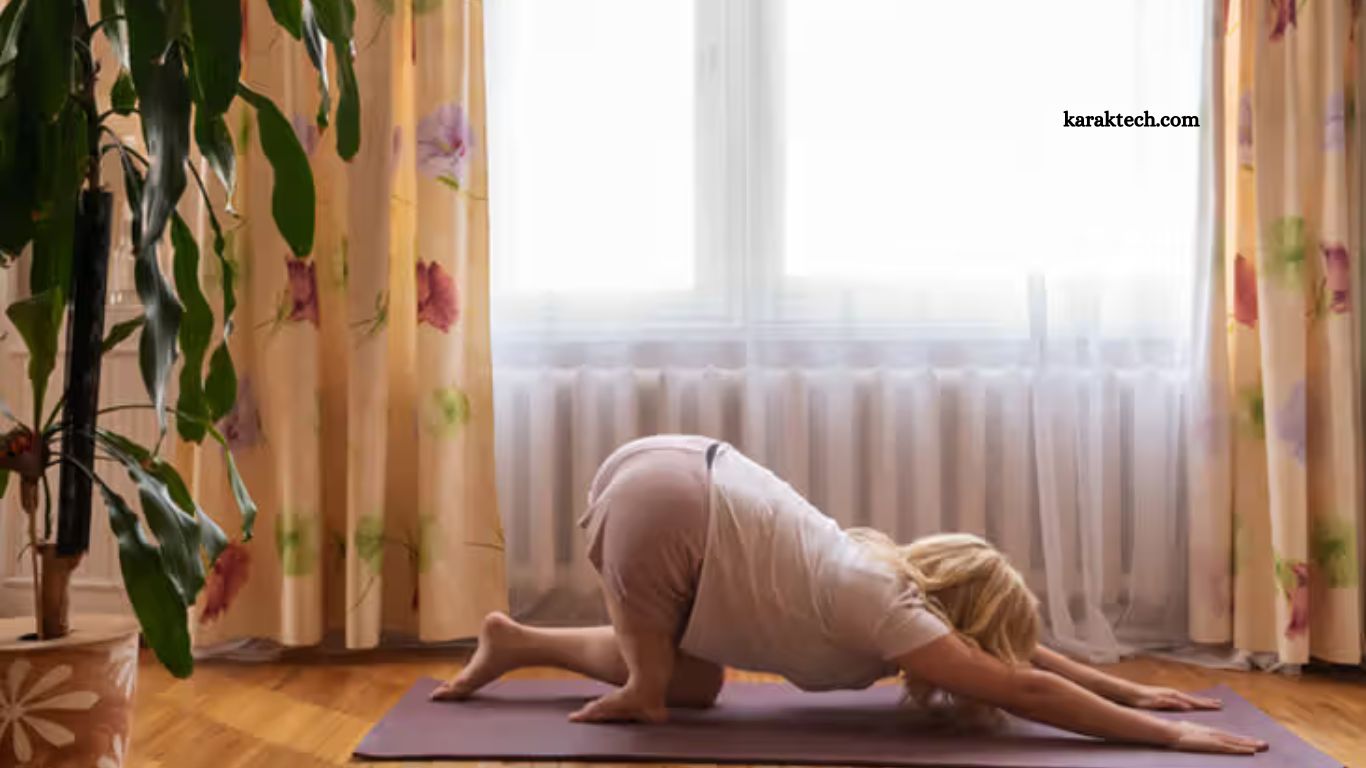
Child’s Pose
Child’s Pose is one of the most calming yoga positions. It gently stretches the back, hips, and shoulders while encouraging slow, deep breathing.
How to Do Child’s Pose
- Kneel on the floor.
- Sit back on your heels.
- Fold your torso forward.
- Extend your arms in front or place them beside your body.
- Rest your forehead on the mat.
- Breathe deeply for 1 to 3 minutes.
Benefits
- Relaxes the nervous system
- Releases back tension
- Quiets racing thoughts
Cat-Cow Stretch
Cat-Cow Stretch
This gentle movement improves spinal flexibility and coordinates breath with motion.
How to Do Cat-Cow Stretch
- Start on hands and knees.
- Inhale, arch your back, and lift your head.
- Exhale, round your spine, and tuck your chin.
- Repeat for 1 to 2 minutes.
Benefits
- Reduces muscle stiffness
- Improves breathing
- Releases emotional tension
Legs-Up-the-Wall Pose (Viparita Karani)
Legs-Up-the-Wall Pose
This restorative pose calms the body and helps reduce anxiety quickly.
How to Do Legs-Up-the-Wall Pose
- Sit beside a wall.
- Lie down and extend your legs up the wall.
- Relax your arms by your sides.
- Stay for 5 to 10 minutes.
Benefits
- Slows heart rate
- Relieves tired legs
- Promotes deep relaxation
Standing Forward Bend (Uttanasana)
Standing Forward Bend
This pose stretches the back and hamstrings while soothing the mind.
How to Do a Standing Forward Bend
- Stand with feet hip-width apart.
- Bend forward from the hips.
- Let your head and arms hang naturally.
- Hold for 30 to 60 seconds.
Benefits
- Reduces mental fatigue
- Relaxes neck and shoulders
- Improves circulation
Seated Forward Fold (Paschimottanasana)
Seated Forward Fold
A gentle seated stretch that encourages introspection and calmness.
How to Do Seated Forward Fold
- Sit with legs extended.
- Inhale and lengthen your spine.
- Exhale and reach toward your feet.
- Hold for 1 to 3 minutes.
Benefits
- Calms the mind
- Reduces irritability
- Supports relaxation
Easy Pose with Deep Breathing (Sukhasana)
Easy Pose
This simple seated posture is ideal for mindful breathing and meditation.
How to Do Easy Pose
- Sit cross-legged.
- Rest your hands on your knees.
- Close your eyes.
- Inhale slowly for four counts.
- Exhale for six counts.
- Continue for 5 minutes.
Benefits
- Improves concentration
- Lowers anxiety
- Encourages emotional balance
Corpse Pose (Savasana)
Corpse Pose
Savasana provides complete physical and mental relaxation.
How to Do Corpse Pose
- Lie flat on your back.
- Relax your arms and legs.
- Close your eyes.
- Focus on your breath.
- Stay for 5 to 10 minutes.
Benefits
- Releases full-body tension
- Lowers blood pressure
- Restores calmness
Breathing Techniques for Anxiety Relief
Yoga breathing enhances the calming effects of movement.
Simple Deep Breathing Practice
- Inhale through your nose for four counts.
- Hold for two counts.
- Exhale for six counts.
- Repeat for five minutes.
This technique activates the parasympathetic nervous system and reduces feelings of panic.
15-Minute Yoga Routine for Stress and Anxiety
Try this simple daily sequence:
- Child’s Pose – 2 minutes
- Cat-Cow Stretch – 2 minutes
- Standing Forward Bend – 1 minute
- Seated Forward Fold – 2 minutes
- Legs-Up-the-Wall Pose – 5 minutes
- Savasana – 3 minutes
This routine can help reset your mind and body after a stressful day.
Best Time to Practice Yoga for Stress Relief
Yoga can be practiced at any time, but many people benefit most from:
- Morning for mental clarity
- Afternoon for energy balance
- Evening for better sleep
Consistency matters more than timing.
Tips for Beginners
- Start with 10 to 15 minutes daily
- Focus on breathing
- Avoid forcing any stretch
- Use cushions or blankets for support
- Practice in a quiet space
Additional Lifestyle Habits to Reduce Anxiety
Combine yoga with healthy habits for stronger results:
- Regular sleep schedule
- Balanced nutrition
- Reduced caffeine intake
- Daily walking
- Meditation
- Limited screen time
Frequently Asked Questions
How long should I practice yoga for stress relief?
10 to 15 minutes daily can reduce stress and calm the mind.
Which yoga pose is best for anxiety?
Child’s Pose is one of the most effective poses for quick relaxation.
Can beginners do these yoga exercises?
Yes, all poses in this guide are simple and beginner-friendly.
When is the best time to practice yoga?
Morning and evening are ideal for stress relief and better sleep.
How quickly does yoga reduce anxiety?
Many people feel calmer after just one session.
Do I need equipment for yoga at home?
No, only a yoga mat or soft surface is enough.
Conclusion
Easy yoga exercises provide a natural and effective way to reduce stress and anxiety. Simple poses like Child’s Pose, Legs-Up-the-Wall Pose, and Corpse Pose help relax the body, calm the mind, and improve emotional balance. Practicing for just 10 to 15 minutes each day can lead to better sleep, lower tension, and greater mental clarity.
